Are Old T-Shirts the Secret to a Just Transition?
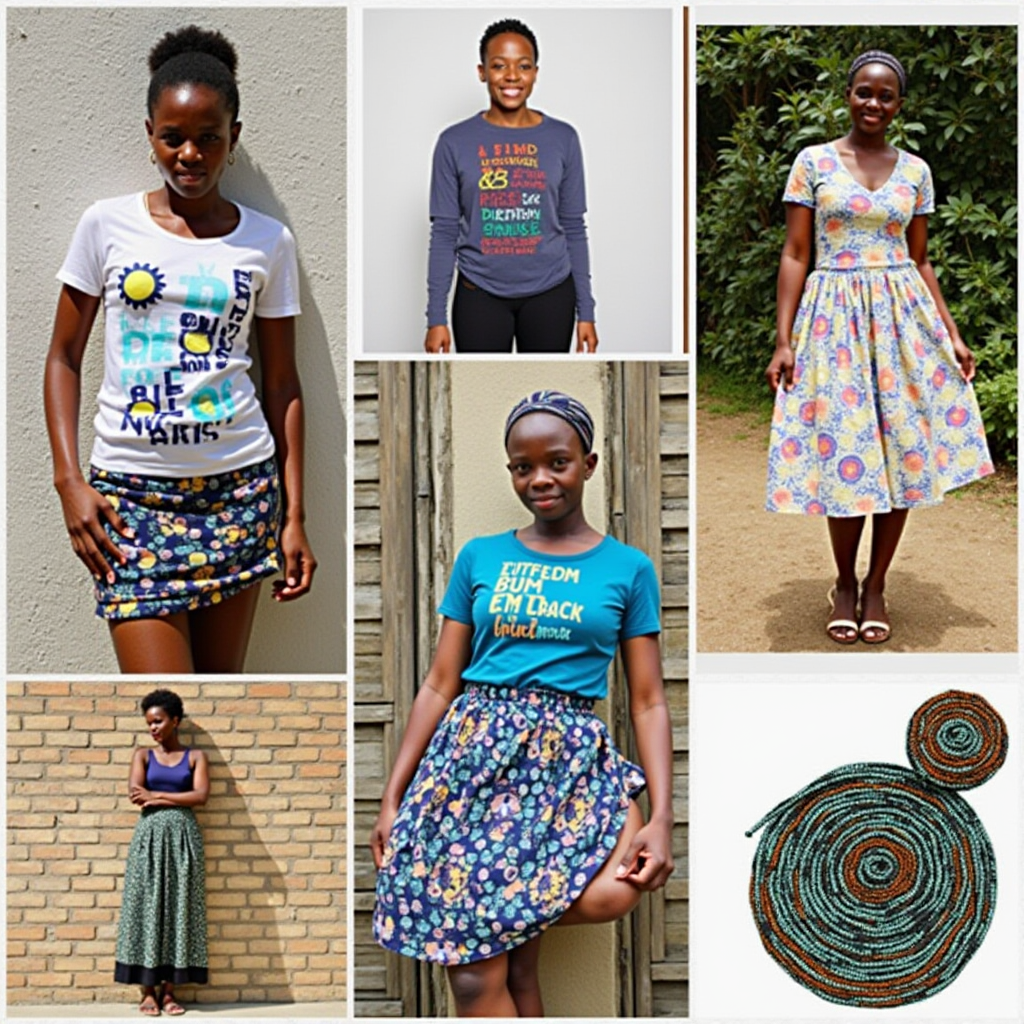
This post is part of our “(Re)Made in Ghana” series, which explores what one of the world’s largest circular fashion ecosystems – Kantamanto Market – can teach us about the future of fashion. Read our series on “Made in Italy” here, “Made in India” here, and “Made in the UK” here.
What is a Just Transition?
In theory, a just transition means that no one is left behind as major industries decarbonize; workers are up‑skilled or re‑skilled when their roles shift in low‑carbon economies; and environmental and social impact go hand in hand. In fashion, tangible examples are hard to find—until the partnership between The Or Foundation and The Project Justine (TPJ) showed how old T‑shirts can become a catalyst for change.
The Collaboration that Matters
- TPJ’s Winneba Weavers program revives local textile production in Ghana’s coastal town of Winneba.
- The Or Foundation’s Mabilgu program retrains young women who work as kayayei (head‑porters) in and around Kantamanto Market.
- Both programs merge to create tarn—a recycled yarn made from upcycled T‑shirts—producing jobs, empowerment, and environmental relief.
Why Tarn? Why Old T‑Shirts?
Old T‑shirts are abundant in Ghana’s market waste streams. By turning them into high‑quality yarn, we close the loop on textile waste, reduce landfill, and give local women new income opportunities. Tarn is more than just a yarn: it’s aEncounter of culture, technology, and community.
Kantamanto Market: A Circular Fashion Ecosystem
Located in the heart of Accra, Kantamanto Market is a living laboratory for circular fashion. Its stalls sell everything from fresh produce to discarded clothing, and the new tarn initiative turns that discarded cloth into the raw material for fashion accessories, apparel, and even home textiles.
From Waste to Yarn – The Tarn Production Process
Our team at The Or Foundation is currently studying the scalability of tarn. The production chain is simple yet powerful:
- Collect seamless or circular T‑shirts from Kantamanto.
- Sort, clean, and spin into yarn.
- Blend tarn with natural fibers to create a versatile yarn.
- Spin the yarn on custom 12‑pedal looms built for the Winneba Weavers program.
- Weave and design a range of products—from laptop cases to woven hats—using digital 3‑D design tools.
Benefits of Tarn
- Eco‑friendly: Reduces textile waste by up to 70% in local communities.
- Cost‑effective: Uses locally sourced T‑shirts, cutting import costs.
- Durable: Tarn yarn has a higher tensile strength than conventional cotton yarn.
- Versatile: Ideal for accessories, apparel, and home décor.
Empowering Women Through Mabilgu
Mabilgu is a three‑month bootcamp that focuses on neuroplasticity, community building, and skill development. Women arrive with counseling, English lessons, financial literacy, and empowerment workshops—all designed to help them become confident leaders in their craft.
Training Highlights
- Neuroplasticity workshops by Shamiri Institute professionals.
- English, financial literacy, numeracy, study techniques, and time‑management modules.
- Empowerment sessions that encourage women to voice their ideas and lead classes.
Mabilgu Success Stories
Six Mabilgu apprentices have already mastered tarn production. Two graduates—Dinnani and Kuoro Earth—have launched businesses that turn tarn into hats, laptop cases, and more. Their collaboration with Winneba Weavers is the first step toward scaling tarn production.

Figure 1: Tarn bootcamp in action.
Weaving the Future: Winneba Weavers
Winneba Weavers began with research at the University of Education in Winneba, where local weaving traditions were studied and modernized. Custom 12‑pedal looms were built exclusively for this program, giving women a powerful tool for digital design and 3‑D weaving.
Innovation in the Loops
- Digital design software for pattern creation.
- 3‑D weaving techniques that allow for complex textures.
- Local looms with 12 pedals, compared to the standard 4‑6 pedal looms.
Scaling Tarn Production
We aim to industrialize tarn so it can be integrated into existing Ghanaian products—such as the woven smocks popular in northern Ghana, which traditionally rely on imported cotton. By redesigning these smocks with tarn, we can:
- Reduce import dependency.
- Lower production costs.
- Increase local employment.
- Improve the overall sustainability of the fashion supply chain.
Sustainability & Social Impact
Programs like this are essential as the fashion industry forges ahead with decarbonization. By focusing on systems—environmental, social, carbon, water, upstream, downstream—we ensure that the transition is truly transformational.
Future Avenues for Tarn
- Waste categorization at Kantamanto Market to quantify seamless T‑shirt waste.
- Integration of tarn into home‑made smocks and accessories.
- Expansion to all Ghanaian households—each T‑shirt can become a piece of the tapestry.
- Potential partnerships with local fashion houses and designers.
Call to Action
We’re excited about the future of tarn and the livelihoods it will create. If you’re interested in learning more about this circular fashion initiative, drop a comment, share the post on social media, or simply drop by the market to see tarn in action.
Thank you for reading! Stay tuned for more updates on our (Re)Made in Ghana journey.
Suggestion:
Japan: Tokyo & Kyoto Culture & History